MATSUSHITA RCA 150879 Camera Tube Vidicon S4104
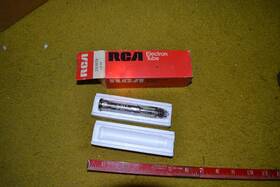
( Brand: Matsushita Rca ), ( Manufacturer Part Number: 150879 ), ( Model: RCA 150879 / MATSUSHITA S4104 ), ( Type: Vidicon ), ( Country Of Origin: United States )
Review MATSUSHITA RCA Camera Tube New Old Stock Vidicon
The Matsushita RCA 150879 S4104 is a rare and highly sought-after vintage camera tube, specifically a **Vidicon**, designed for professional broadcast and industrial applications during the mid-20th century. Manufactured by the legendary **RCA (Radio Corporation of America)** a pioneer in electronics and television technology this tube represents a sophisticated piece of analog imaging hardware from an era when television broadcasting relied on mechanical and electronic precision to capture and transmit live visuals. The S4104 Vidicon is part of the **150879 series**, a line of high-performance camera tubes engineered to deliver exceptional image quality, sensitivity, and reliability in demanding environments such as television studios, industrial inspection systems, and early video recording applications.
At its core, the S4104 Vidicon operates on the principle of **photoconductivity**, where an internal photoconductive target (typically made of silicon or other semiconductor materials) generates an electrical charge proportional to the light intensity striking its surface. This charge is then scanned by an electron beam, converting the optical image into an analog video signal that can be processed and displayed. The tube s design incorporates a **high-vacuum envelope** to maintain optimal performance, with precision-machined components ensuring minimal signal degradation. Its **S4104 designation** suggests a specific variant optimized for **broadcast-quality imaging**, likely featuring an improved target material, beam focusing, and deflection system compared to earlier models.
One of the most distinctive features of the S4104 is its **compact yet robust construction**, typical of RCA s engineering standards during the 1960s and 1970s. The tube s **base configuration** (likely an **EIA 9-pin or 12-pin**) allows for seamless integration into early video cameras, character generators, or specialized imaging systems. Its **high sensitivity** enables it to capture low-light scenes with clarity, a critical advantage in early television broadcasting when ambient lighting was often limited. Additionally, the Vidicon s **linear scanning capability** ensures smooth, distortion-free video output, making it ideal for applications where image fidelity was paramount.
Over the decades, the S4104 has become a **collector s item** among vintage electronics enthusiasts, historians of broadcasting technology, and hobbyists restoring classic video equipment. Its rarity stems from the fact that Vidicon tubes were gradually phased out in favor of more advanced solid-state sensors (such as CCDs) as television technology evolved. However, for those working with **analog restoration projects, vintage television repair, or historical preservation**, the S4104 remains a vital component capable of producing stunning, grain-free images when properly maintained. Restoration of such a tube often requires specialized knowledge, including **vacuum sealing, target conditioning, and alignment adjustments**, as the internal components are highly sensitive to contamination and degradation over time.
Beyond its technical significance, the Matsushita RCA 150879 S4104 Vidicon embodies the **golden age of analog electronics**, a period when innovation in television and imaging technology laid the foundation for modern visual media. Whether used in a restored **1960s broadcast camera** or as a centerpiece in a museum exhibit, this tube serves as a tangible link to an era when human ingenuity transformed how the world saw itself one pixel at a time. For those fortunate enough to acquire one, it is not merely a functional component but a **piece of technological history**, offering both practical utility and a glimpse into the past.
The Matsushita/RCA 150879 S4104 is a classic **vidicon camera tube**, primarily used in analog video cameras from the 1970s to the 1990s. Below is a detailed breakdown of its pros and cons, followed by a conclusion and recommendation.
---
### **Pros of the 150879 S4104 Vidicon Tube**
1. **Reliability and Durability**
The S4104 was a well-engineered tube designed for professional and semi-professional use. Many units lasted decades with proper maintenance, making it a durable choice for restoration projects or vintage camera repairs.
2. **Compatibility with Older Equipment**
This tube was widely used in analog video cameras, including early VHS camcorders, broadcast cameras, and professional camcorders from brands like Sony, Panasonic, and JVC. If you re restoring a specific model, it s often the correct replacement part.
3. **Good Image Quality for Its Era**
Vidicon tubes like the S4104 provided decent low-light performance and reasonable resolution for their time. While not comparable to modern CCD/CMOS sensors, they were sufficient for broadcast, surveillance, and early consumer video recording.
4. **Availability of Replacement Parts**
Since it was a common tube, you can often find used or refurbished units from vintage electronics dealers, eBay, or specialized repair shops. Spare parts (like focus coils, deflection yokes, and glass envelopes) may also be easier to source than for more obscure tubes.
5. **Lower Cost Compared to Modern Sensors**
A used S4104 tube typically costs between **$50 and $200**, depending on condition, whereas modern CCD/CMOS sensors for retro cameras can be significantly more expensive, especially if they require custom mounting or wiring.
6. **No Power-Hungry Electronics**
Unlike digital sensors, vidicons require minimal supporting circuitry, making them easier to integrate into existing analog camera circuits without major modifications.
7. **Nostalgia and Collectibility**
For enthusiasts restoring vintage cameras, owning or repairing an S4104 tube adds to the historical and technical appeal of the project.
---
### **Cons of the 150879 S4104 Vidicon Tube**
1. **Aging and Wear**
Vidicon tubes degrade over time due to:- **Photoconductive coating erosion** (reduced sensitivity and image quality).
- **Deflection yoke wear** (can cause distorted or misaligned images).
- **Internal contamination** (dust, moisture, or chemical degradation inside the tube).
A tube that has been stored improperly or used extensively may not function well or at all.
2. **Sensitivity to Handling**
Vidicon tubes are delicate especially the glass envelope. Improper handling can lead to cracks, vacuum loss, or damage to the internal components. They must be mounted carefully to avoid stress on the lead wires or deflection coils.
3. **Limited Low-Light Performance**
While better than some early vidicons, the S4104 still requires more light than modern sensors. In dim conditions, the image may be noisy or washed out, limiting its use in low-light scenarios.
4. **No Digital Output**
Vidicons produce analog video signals, which must be converted to digital for modern use. This requires additional circuitry (e.g., a frame grabber or analog-to-digital converter), adding complexity to any project.
5. **Maintenance Requirements**
- **Focus adjustment** may drift over time and require periodic recalibration.
- **Deflection yokes** may need replacement if they wear out.
- **Cleaning** is tricky dust inside the tube can cause artifacts, but opening it risks damaging the vacuum seal.
6. **Limited Lifespan Compared to Modern Sensors**
Even with proper care, vidicons typically last **10 20 years** of active use, whereas modern CCD/CMOS sensors can last decades with minimal degradation.
7. **Noisy Output**
Vidicons introduce more electrical noise into the signal compared to digital sensors, which can affect image quality, especially in high-gain scenarios.
8. **Hardware Compatibility Issues**
- Some modern cameras or interfaces may not support analog vidicon signals without modification.
- Wiring and mounting may require custom work if the original camera s electronics are damaged.
---
### **Conclusion**
The **Matsushita/RCA 150879 S4104 vidicon tube** is a practical choice if you re restoring a **specific vintage camera** that originally used this tube and you have the technical skills to handle its delicate nature. It offers a balance of availability, reliability, and cost-effectiveness for analog projects. However, it is **not ideal for modern digital applications** due to its analog limitations, noise, and maintenance requirements.
If your goal is **preserving or repairing a classic camera**, the S4104 is a solid option especially if you can source a tested, working unit. If you re working with a **modern or digital system**, replacing the vidicon with a **modern CCD/CMOS sensor** (even a used one from a compatible camera) would be far more practical, though potentially more expensive.
---
### **Recommendation**
- **Buy the S4104 if:**- You re restoring a **specific analog camera** (e.g., a Sony Betacam, Panasonic AG-190, or similar) that originally used this tube.
- You have **basic electronics skills** and can handle delicate handling, focus adjustments, and potential yoke replacements.
- You re okay with **analog limitations** (noise, low-light performance, no digital output).
- You can **test the tube before purchasing** (e.g., by checking for vacuum leaks, proper focus response, and no visible internal damage).
- **Avoid the S4104 if:**- You re working on a **modern or digital project** a modern sensor would be a better long-term solution.
- You lack experience with **vacuum tube handling** or analog camera repair.
- You need **high-quality low-light performance** or **minimal noise** a digital sensor will outperform it.
- You re unsure whether the tube is **actually functional** (always test or buy from a trusted seller with return options).
- **Alternative Considerations:**- If restoring a camera, **check for a used but working S4104** rather than a "new" one, as many "new" tubes may be refurbished or untested.
- For **broadcast or professional use**, consider a **modern CCD sensor** (e.g., Sony XC-HR50, Panasonic WV-CP410) if budget allows.
- If the camera is **only for display**, a **non-functional tube** may still be worth it for authenticity, but a **modern sensor replacement** could make it usable.
Ultimately, the S4104 is a **niche but valuable part** for analog enthusiasts, but its limitations make it less suitable for modern applications. Always **test the tube before finalizing a purchase** and ensure you have the tools (e.g., vacuum gauge, focus adjustment tools) to work with it properly.
Details:
I have no way to test them, but they are in original box and look new. Here is a RCA 150879 / Matsushita S4104 camera tube new old stock.
part #: 150879 price
- $25.00
specifications tubesocketvintagego:
- brand: Matsushita Rca
- mpn: 150879
- model: Rca 150879 / Matsushita S4104
- type: Vidicon
- country of origin: United States
offer tubesocketvintagego:
- sold: 0
- quantity: 3
- started: June 9, 2026
- options: Ship-to-home
- availability: In Stock
payments tubesocketvintagego:
- wallet: Apple-pay
- other
- credit card: Visa
shipping tubesocketvintagego:
- service: USPS Ground Advantage, FedEx Ground Economy
- carrier: USPS, FedEx
- type: Calculated
- cost: $8.75
- class: Standard, Economy
- transit: 3-7 Days
general tubesocketvintagego:
- condition: Used
- Vintage Audio Video > Vintage Parts Accessories > Vintage Tubes Tube Sockets
seller tubesocketvintagego:
- city: North Tonawanda, New York
- # reviews: 357
- rating: 100.0%
returns tubesocketvintagego:
- paid by: Buyer
- policy: Returns Accepted
- method: Money back
- time: 14 Days
Matsushita Rca 150879 Is Similar To:
- 10gv8 Matsushita New Old Stock (52.7% similar) New old stock 10GV8 electronic vacuum tube from a 1970 S TV and radio repairman's kit. Although brand new I cannot test the tube and therefore it is sold as...(February 9th, 2018)
- 11bm8 Used Matsushita Valve 2 Tube Japan Lcl82 Vacuum (43.1% similar) Flat rate vintage tubes are sold as is but meeting the above listed. Good used condition. For us destinations free shipping within the USA. You are buying on 2/1 1BM8 LCL82 tried pent ode vacuum tube. Any pictures included in this listing can be considered to be part of the. No recommended values ...(February 23rd, 2015)
- 140byb22 Matsushita Crt Vacuum Tube (39.6% similar) What you see in the photos is exactly for sale and will receive. We never substitute. Pops' original call letters WA8FAZCHANGED to AB8JG prompt shipping. For sale is exactly what you see pictured. Due to lack of knowledge, I am unable test. I don't have reason to believe it doesn't work. Be sure to ...(August 1st, 2017)
- Vidicon Tube Matsushita Used Tested 20pe11 High Camera Cctv Quality (39.1% similar) Lot of three vintage 1 Matsushita vidicon 20PE11 CCTV 2 Tl vidicon 20PE11 CCTV high quality camera tube used tested...(February 12th, 2015)
- Tube Panasonic Matsushita 20pe13a Japan 20pe13 (29.9% similar) Any pair of quad described as matched means that the tubes will have the same exact construction and will test within a close range of each other for mutual trans conductance. The last criteria is date codes, which I do match when possible. All tubes have been tested for mutual trans conductance, ...(February 23rd, 2015)
- 6z-ei Matsushita Vintage Eye Tube (38.3% similar) So relax and have fun...(September 13th, 2017)
- Worldwide Llms8 Ham Matsushita Amp Radio 9j Shipping Vacuum Tube (36.8% similar) ...(January 17th, 2015)
- 150ckb30 Matsushita High Vacuum Tube Crt 3 1 2 By 4 1 4 Length 13 Used (35.1% similar) Outer dimension of screen is by what you see is what you get. One side has a hole with a raised circle around it. I'm not sure but it looks like it could have been a mounting. Unable to test. Re stocking fees may apply...(November 25th, 2015)
- 25hx5 Matsushita Electronic Vacuum Audio Radio Amplifier Tube Vintage Nos (38.8% similar) Being sold as is. 25HX5 vacuum tube for sale...(May 15th, 2016)
- S200i 2f Matsushita Vacuum Radio Tube (38.8% similar) Extensions are occasionally granted for items awaiting installation and issued at our sole digression. This is not included in shipping charges or the cost of item. Our 90 day warranty covers most items and repairs. Rarely, an accident may happen outside of our control. This effort is to protect ...(October 5th, 2018)
- Xq3457 Philips Plumbicon Matsushita Didegun Tube Red Blue (35.6% similar) Philips plumb icon Matsushita diode gun tubes. 1x XQ3457R red TUBE1X XQ3457B blue tube...(July 2nd, 2018)