INTEL D8086 Microprocessor
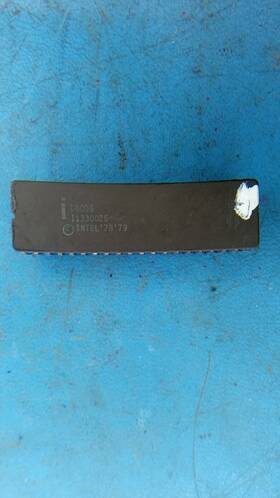
( Brand: Intel ), ( Manufacturer Part Number: D8086 )
Review INTEL Microprocessor
The Intel 8086 microprocessor is a significant milestone in the history of microprocessors, marking a transition from 16-bit to 32-bit architecture. This microprocessor was introduced by Intel in 1978 and was a crucial component of the first IBM Personal Computer, released in 1981.
The Intel 8086 is a complex instruction set computing (CISC) microprocessor, capable of executing 16-bit and 32-bit instructions. It features a 16-bit data bus, a 20-bit address bus, and an 16-bit internal data path. The 8086 has a 16-bit microprogrammed control unit, which allows for efficient execution of instructions.
The 8086 microprocessor includes several advanced features such as a segmented memory organization, which allows for better memory management, and a powerful instruction set that includes instructions for I/O operations, stack manipulation, and branching. The 8086 also includes a 16-bit general-purpose register set, which includes eight general-purpose registers (AX, BX, CX, DX, SI, DI, SP, and BP), as well as several special-purpose registers.
The 8086 microprocessor operates at a clock speed of 5 MHz, but its successors, such as the 80286 and 80386, have higher clock speeds and more advanced features. The 8086 microprocessor paved the way for the development of modern microprocessors and has been an influential design in the computing industry.
In summary, the Intel 8086 microprocessor is a significant milestone in the history of microprocessors, featuring a 16-bit and 32-bit architecture, advanced memory management, a powerful instruction set, and a 16-bit general-purpose register set. It was a crucial component of the first IBM Personal Computer and has had a lasting impact on the computing industry.
Pros of buying an Intel 8086 microprocessor:1. Historical significance: The Intel 8086 is a legendary microprocessor that played a significant role in the evolution of the modern computer industry. It was one of the first microprocessors to support 16-bit data and address buses, which paved the way for more powerful and efficient processors.
2. Compatibility: The Intel 8086 is still widely used in vintage computing and emulation projects, making it a popular choice for hobbyists and collectors. It is compatible with a wide range of operating systems and hardware, including DOS, Windows, and Linux.
3. Availability: The Intel 8086 is relatively easy to find on the secondary market, and its price has remained stable over the years. This makes it an affordable option for enthusiasts who want to build or restore vintage computers.
Cons of buying an Intel 8086 microprocessor:1. Limited performance: The Intel 8086 is a 16-bit microprocessor, which means it has a limited amount of data and address bus widths. This means it will not be able to handle modern operating systems or applications, and its performance will be significantly slower than more recent processors.
2. Outdated technology: The Intel 8086 was released in 1978, which means it is more than 40 years old. While it may still be functional, its technology is outdated and may require specialized knowledge or hardware to use effectively.
3. Limited compatibility with newer hardware: The Intel 8086 may not be compatible with newer hardware, such as USB ports, wireless connectivity, and high-definition displays. This may limit the functionality of a computer built around an 8086 microprocessor.
Conclusion: While the Intel 8086 is a fascinating piece of history and a popular choice for collectors and hobbyists, its limited performance and outdated technology make it a less than ideal choice for everyday use. It may be a fun and educational project to build or restore a vintage computer using an 8086, but it is not recommended for use as a primary computer.
Recommendation: If you are looking for a microprocessor for everyday use, I would recommend considering more recent models, such as an Intel i5 or i7. These processors offer significantly more power, compatibility, and performance than an 8086, and are well-suited to running modern operating systems and applications. If you are interested in vintage computing, an 8086 may be a fun and educational project, but it is not recommended for primary use.
Details:
D8086 INTEL Microprocessor.
part #: d8086 prices
- $10.95-$499.95
specifications tubesocketvintagego:
- brand: Intel
- mpn: D8086
payments tubesocketvintagego:
- credit card: Mastercard
- other
- wallet: Paypal
shipping tubesocketvintagego:
- service: USPS Ground Advantage
- transit: 7-13 Days
- cost: $5.95
- type: Calculated
- class: Standard
- carrier: USPS
returns tubesocketvintagego:
- policy: No Returns
general tubesocketvintagego:
- condition: Used
- Vintage Audio Video > Vintage Parts Accessories > Vintage Tubes Tube Sockets
seller tubesocketvintagego:
- # reviews: 769
- city: Tampa, Florida
- rating: 100.0%
offer tubesocketvintagego:
- quantity: 1
- options: Ship-to-home
- availability: In Stock
- started: November 2, 2024
- sold: 0