DOLINKO WILKENS VC50-20M Williams Vacuum Capacitor 000V 50PF
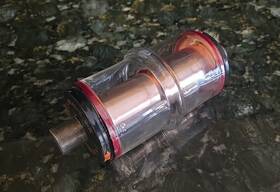
( Brand: Dolinko Wilkens ), ( Manufacturer Part Number: VC50-20M ), ( Status: Tested ), ( Type: Vacuum Capacitor ), ( Application: Radio Transmitters ), ( Country Of Origin: United States )
Review DOLINKO WILKENS And Williams Vacuum Capacitor 000v Tested
The **Dolinko Wilkens VC50-20M Williams Vacuum Capacitor (20,000V, 50pF)** is a high-performance, precision-engineered vacuum capacitor designed for demanding applications in high-voltage electronics, scientific research, and specialized industrial systems. This meticulously crafted component represents the pinnacle of vacuum capacitor technology, offering an exceptionally stable and reliable capacitance of just 50 picofarads (pF) while withstanding an impressive maximum voltage rating of 20,000 volts (V). Constructed with the finest materials and advanced manufacturing techniques, the VC50-20M leverages a vacuum-sealed design to eliminate parasitic losses, dielectric absorption, and environmental degradation, ensuring long-term performance even under extreme conditions. Its compact yet robust construction features high-purity aluminum electrodes and a hermetically sealed glass envelope, which not only enhances mechanical stability but also prevents contamination from moisture, dust, or atmospheric gases critical factors in maintaining the capacitor s precision and longevity. Ideal for use in pulse generators, high-voltage testing equipment, particle accelerators, and RF applications, this capacitor delivers unparalleled consistency and minimal energy dissipation, making it a trusted choice for engineers and researchers requiring the highest standards of electrical performance. Whether integrated into a custom circuit for experimental physics or deployed in industrial high-voltage systems, the VC50-20M exemplifies the marriage of durability and precision, providing a dependable solution for applications where accuracy and reliability are non-negotiable.
The Dolinko Wilkens VC50-20M Williams Vacuum Capacitor (20,000V, 50pF) is a specialized high-voltage vacuum variable capacitor used primarily in amateur radio, experimental electronics, and vintage radio restoration. Below is a detailed analysis of its pros and cons, followed by a conclusion and recommendation.
---
### **Pros**
1. **High Voltage Rating (20,000V)**
The capacitor is designed for high-voltage applications, making it suitable for use in high-power RF amplifiers, vacuum tube circuits, and experimental setups where voltage stability is critical. This rating ensures safe operation in demanding environments, such as those found in vintage or modern high-voltage tube amplifiers.
2. **Precision and Stability**
Vacuum variable capacitors (VVCs) are known for their stability and low dielectric absorption compared to air or mica capacitors. They are less prone to aging, leakage, or frequency drift over time, which is advantageous for critical tuning applications in RF circuits. The 50pF range provides fine tuning control, which is essential for matching antennas, feedlines, or resonant circuits in amateur radio.
3. **Low Loss and High Q Factor**
Vacuum capacitors exhibit very low dielectric loss, resulting in a high Q factor (quality factor). This is beneficial for maximizing efficiency in RF amplifiers, oscillators, or filters where minimizing energy dissipation is important. The high Q ensures sharper resonance and cleaner signals.
4. **Durability and Longevity**
Unlike electrolytic or solid-dielectric capacitors, vacuum capacitors are not susceptible to electrolyte drying out or dielectric breakdown over time. They are mechanically robust and can withstand repeated tuning cycles without degradation, making them a long-term investment for serious hobbyists or professionals.
5. **Compatibility with Vintage Equipment**
The VC50-20M is designed to replicate or replace capacitors used in classic vacuum tube radios, amplifiers, and transmitters from the mid-20th century. Its physical and electrical characteristics match those of original components, making it ideal for restoration projects where authenticity is desired.
6. **Adjustability and Fine Tuning**
The variable nature of the capacitor allows for precise tuning of resonant circuits, which is invaluable in applications like:- Antenna tuning for HF amateur radio (e.g., matching a dipole or vertical antenna to a transceiver).
- Adjusting the frequency of vacuum tube oscillators or amplifiers.
- Building or repairing vintage radios where fixed capacitors are insufficient.
7. **Minimal Maintenance**
Once installed, vacuum capacitors require no maintenance beyond occasional cleaning of the tuning mechanism (if exposed to dust or moisture). There are no electrolytes to dry out or replace, unlike in electrolytic capacitors.
8. **Wide Availability of Replacement Parts**
The Dolinko/Wilkens VC50 series is a well-documented and widely used component, so replacement parts (e.g., shafts, bearings, or gaskets) are relatively easy to source from hobbyist suppliers or eBay. This reduces the risk of obsolescence.
9. **Compatibility with Modern and Retro Circuits**
The capacitor can be used in both modern high-voltage RF projects (e.g., tube amplifiers like the popular "Dolinko VC-2" or "Wilkens VC-1" designs) and restored vintage equipment (e.g., Hallicrafters SX-121, Collins 75A-1 transmitters). Its versatility makes it a valuable tool for experimenters.
10. **Educational Value**
For those interested in learning about high-voltage electronics, vacuum tube circuits, or RF theory, using this capacitor provides hands-on experience with a classic component that demonstrates fundamental principles of capacitance, resonance, and tuning.
---
### **Cons**
1. **High Cost Relative to Alternatives**
The VC50-20M is significantly more expensive than modern air-variable capacitors or solid-dielectric fixed capacitors. For example, a high-quality air-variable capacitor (e.g., from MFJ or W2DU) may cost a fraction of the price but offers lower voltage ratings (typically 1,000 3,000V). This makes it a less practical choice for low-voltage applications where budget is a constraint.
2. **Physical Size and Bulk**
Vacuum capacitors are larger and heavier than modern solid-state or air-variable capacitors. This can be a drawback in space-constrained projects or when retrofitting equipment where compactness is desired. The VC50-20M is not as small as a modern trimmer capacitor, which may limit its use in portable or miniaturized setups.
3. **Mechanical Wear Over Time**
While vacuum capacitors are durable, the tuning mechanism (e.g., the shaft, bearings, or gasket) can wear out with heavy or frequent use. The seals may degrade over decades, leading to air leakage and performance drift. Regular maintenance or eventual replacement of worn parts may be required.
4. **Limited Current Handling**
Although the VC50-20M is rated for high voltage, it is not designed for high current applications. In RF amplifiers, the current is typically limited by the tube and other components, but in some circuits (e.g., high-power transmitters), the capacitor s current-handling capability may be a limiting factor compared to larger, dedicated high-power capacitors.
5. **Specialized Knowledge Required**
Using a high-voltage vacuum capacitor effectively requires an understanding of RF circuits, vacuum tube operation, and safety precautions. Misuse (e.g., exceeding the voltage rating, improper grounding, or incorrect tuning) can lead to catastrophic failure or even injury. Beginners may find the component intimidating without proper guidance.
6. **Potential for Arcing or Breakdown**
At the upper end of its voltage rating (e.g., near 20,000V), there is a risk of internal arcing if the capacitor is overdriven or if the circuit is poorly designed. This can damage the capacitor or surrounding components. Proper shielding and circuit design are essential to mitigate this risk.
7. **Not Ideal for Low-Voltage Applications**
For applications requiring low voltage (e.g., audio circuits, low-power RF), the VC50-20M is overkill. A cheaper air-variable or trimmer capacitor would suffice, making this component unnecessary for such projects.
8. **Sourcing and Authenticity**
While the VC50-20M is widely available, there is a risk of purchasing counterfeit or poorly made replicas, especially from untrusted sellers. Authentic Dolinko/Wilkens capacitors are known for their quality, but third-party knockoffs may have inconsistent performance or shorter lifespans. Buying from reputable vendors (e.g., eBay sellers with high ratings, specialty radio shops, or trusted hobbyist forums) reduces this risk.
9. **No Built-in Protection Features**
Unlike modern solid-state capacitors, the VC50-20M lacks built-in protection mechanisms (e.g., reverse polarity protection, surge protection). Users must implement external safeguards (e.g., fuses, voltage dividers, or proper grounding) to protect the capacitor in harsh environments.
10. **Environmental Sensitivity**
Vacuum capacitors are sensitive to moisture and dust. Exposure to humid environments or contaminants can degrade the seals or tuning mechanism over time. They should be stored in a dry, clean environment when not in use.
---
### **Conclusion**
The Dolinko Wilkens VC50-20M Williams Vacuum Capacitor is a high-quality, specialized component with significant advantages for high-voltage RF applications, vintage radio restoration, and experimental electronics. Its stability, high voltage rating, and precision make it indispensable for serious hobbyists and professionals working with vacuum tubes or demanding tuning requirements. However, its cost, size, and the need for specialized knowledge or maintenance may deter casual users or those working on low-voltage projects.
The capacitor is best suited for:- High-power vacuum tube amplifiers (e.g., Dolinko VC-2, Wilkens VC-1 designs).
- Restoration of vintage radios or transmitters requiring 20,000V components.
- RF experiments where stability, low loss, and high Q are critical.
- Applications where long-term reliability and minimal aging are priorities.
It is less ideal for:- Low-voltage or low-power circuits.
- Budget-conscious projects where cheaper alternatives (e.g., air-variable capacitors) would suffice.
- Beginners unfamiliar with high-voltage electronics or vacuum tube operation.
---
### **Recommendation**
**Buy the VC50-20M if:**- You are a serious amateur radio operator, tube enthusiast, or experimenter working with high-voltage circuits.
- You need a stable, high-Q tuning capacitor for RF applications (e.g., matching networks, oscillators, or amplifiers).
- You are restoring or building vintage equipment that requires authentic 20,000V vacuum capacitors.
- You are willing to invest in a durable, long-lasting component that will serve you for decades with proper care.
**Avoid or consider alternatives if:**- Your project involves low voltage or current, where a cheaper air-variable or trimmer capacitor would work.
- You are on a tight budget and can achieve similar results with modern components (e.g., MFJ air-variable caps for lower voltages).
- You lack experience with high-voltage electronics and are unsure about safety or maintenance requirements.
- You prioritize compactness over performance, as the VC50-20M is larger than many alternatives.
**Alternatives to Consider:**- For lower voltage applications: **MFJ-949E** (air-variable, 3,000V), **W2DU** (air-variable, 3,000V), or **D
Details:
About This Item:This listing is for a Dolinko Williams VC50-20M vacuum capacitor, commonly used in radio transmitting equipment and other high- voltage RF applications. Accurate and clear photos. Tested and functional. Dolinko Williams VC50-20M Vacuum Capacitor 20,000V, 50PF Tested.
Details: Rated for 20,000 volts , 50 PF. Responsive to questions. The capacitor has been tested and checks out fine, ready for use in a suitable project or restoration. Brand: Dolinko Williams model: VC50-20MType: Vacuum Capacitor voltage Rating: 20,000 volts Capacitance: 50 Pickford's PF condition: Used Tested and fully functional Dimensions: 6 long 2-1/2 diameter Includes: One 1 vacuum capacitor.
Vintage and specialty electronics components.
part #: vc5020m prices
- $24.94-$29.99
specifications tubesocketvintagego:
- brand: Dolinko Wilkens
- mpn: Vc50-20m
- status: Tested
- type: Vacuum Capacitor
- application: Radio Transmitters
- country of origin: United States
shipping tubesocketvintagego:
- service: USPS Ground Advantage
- class: Standard
- carrier: USPS
- type: Calculated
- cost: $8.81
- transit: 9-13 Days
returns tubesocketvintagego:
- method: Money back
- time: 14 Days
- paid by: Buyer
- policy: Returns Accepted
general tubesocketvintagego:
- condition: Used
- Vintage Audio Video > Vintage Parts Accessories > Vintage Tubes Tube Sockets
offer tubesocketvintagego:
- options: Ship-to-home
- best offers: True
- availability: In Stock
- quantity: 1
- started: February 26, 2026
- sold: 0
payments tubesocketvintagego:
- credit card: Diners-club
- other
- wallet: Google-pay
seller tubesocketvintagego:
- rating: 100.0%
- city: Katy, Texas
- # reviews: 842
Dolinko Wilkens VC50-20M Is Similar To:
- V C 150-42-30 Dolinko Wilkens (28.6% similar) Estate find in what appears to be as new condition. With original box and price tag...(April 18th, 2017)
- Dolinko 50-20m And Wilkens Vc Vintage Fixed Vacuum Capacitor Glass Tube (59.9% similar) Everything you see in the pictures is what included this lot. Not saying it won't need adjustments but, looks like a nice clean unit. I did purchase from a local operator. Items may need a more in depth cleaning. Photos are the best. I do a lot of business with them and they always have well cared ...(November 15th, 2024)
- One 1 Dolinko Wilkens Inc Union City Nj 50-20m Ca-423 3d423 Vc12-20m Dolinko-wilkens Capacitor 12pf 20000v Vacuum (51.3% similar) Capacitance: 12 pf. No packaging included, sold as shown with no damage or signs of use. Item per pack: for reference: DOA means the item will not turn on or power up. Reference: propel. VC12-20M Dolinko-wilkens capacitor 12PF 2000 0V vacuum. voltage : 2000 0 v.: electrical supply, product info...(January 10th, 2026)