WESTINGHOUSE Rectifier Tubes WL-7016/606
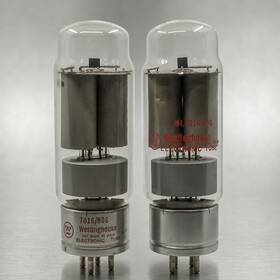
( Brand: Westinghouse ), ( Manufacturer Part Number: WL-7016 ), ( Type: Vacuum Tube )
Review WESTINGHOUSE Pair Wl-7016/606 Industrial Rectifier Tubes Vintage Untested As is
The **Westinghouse WL-7016 and WL-7016/606 rectifier tubes** are rare and highly sought-after vacuum tube components originally designed for high-voltage, high-power applications in early to mid-20th-century electronics, particularly in industrial, military, and early computing systems. These tubes belong to the **mercury-vapor rectifier** family, a robust and efficient type of tube used to convert alternating current (AC) into direct current (DC) with minimal voltage drop, making them ideal for power supply circuits in large-scale equipment. The **WL-7016** and its variant, the **WL-7016/606**, share a similar construction but may differ slightly in internal configuration or pinout, with the latter often featuring slight modifications for compatibility with specific circuit designs. Both tubes operate at high voltages (typically 5,000 to 10,000 volts or more) and can handle substantial current loads, making them indispensable in early radio transmitters, X-ray machines, radar systems, and early digital computers where reliable, high-efficiency rectification was critical.
Physically, these tubes are large, cylindrical, and often feature a **glass envelope** with metal end caps and a **mercury pool cathode** at the base, which vaporizes during operation to facilitate electron emission. The anode (or plate) is typically a heavy-duty, high-temperature-resistant element designed to dissipate the intense heat generated during rectification. The **WL-7016** and **WL-7016/606** are **as-is**, meaning they are offered in their current condition without guarantees of functionality, though they may still exhibit signs of age, such as slight discoloration, minor pitting on the glass, or residual mercury deposits. While some units may retain full operational capability, others could suffer from internal degradation, such as cathode erosion, anode pitting, or vacuum leaks, which would render them unusable without professional restoration. Due to their age often dating back to the 1940s or 1950s these tubes are highly collectible among vintage electronics enthusiasts, historians, and restorers, as they represent a critical link in the evolution of power electronics before the widespread adoption of solid-state components.
For those seeking to incorporate these tubes into functional systems, proper handling is essential. Mercury-vapor tubes require careful startup procedures, including gradual heating to prevent thermal shock and ensuring proper ventilation to avoid mercury vapor inhalation. Additionally, their high-voltage nature demands appropriate safety precautions, such as insulated workstations and proper grounding. While modern electronics have largely replaced these tubes with silicon diodes and other solid-state rectifiers, the **WL-7016 and WL-7016/606** remain fascinating artifacts of early electrical engineering, prized for their historical significance and the challenge they present to restorers and experimenters. Whether acquired for restoration, display, or educational purposes, these tubes offer a tangible connection to a bygone era of electronics, where vacuum tubes ruled the landscape of power conversion and amplification.
Buying used Westinghouse WL-7016 and WL-7016/606 rectifier tubes as-is involves several considerations, depending on your intended use, budget, and technical expertise. Below is a detailed breakdown of the pros and cons, followed by a concluding recommendation.
---
### **Pros of Buying Used WL-7016/WL-7016/606 Rectifier Tubes**
1. **Cost Savings**
New rectifier tubes, especially high-power ones like the WL-7016 (a mercury-vapor rectifier), can be expensive, often costing hundreds or even thousands of dollars. Used tubes are typically available for a fraction of that price, making them an attractive option for hobbyists, restorers, or budget-conscious operators.
2. **Availability**
These tubes are vintage components, and while they were once widely used in radio transmitters, radar systems, and industrial equipment, they are no longer manufactured. Buying used ensures you can obtain them without waiting for backorders or dealing with discontinued parts.
3. **Functional and Reliable (If Properly Maintained)**
Many used rectifier tubes in good condition can still perform reliably, especially if they have been stored correctly (e.g., in a dry, temperature-controlled environment) and have not been subjected to excessive abuse. Some may even have been professionally refurbished or tested by the seller.
4. **Historical and Collectible Value**
For enthusiasts interested in vintage electronics, these tubes may hold nostalgic or historical value. They can be part of a collection or used in restoration projects for classic equipment.
5. **Lower Risk of Obsolescence**
Since these tubes are no longer in production, buying used avoids the risk of future supply shortages or price hikes if demand for them were to increase unexpectedly.
6. **Potential for Testing and Repair**
If you have the skills and tools, you can test the tubes for functionality before purchasing. Some sellers may even provide basic testing results or documentation, reducing uncertainty.
---
### **Cons of Buying Used WL-7016/WL-7016/606 Rectifier Tubes**
1. **Uncertainty About Condition**
Since these tubes are sold "as-is," there is no guarantee of their internal condition. Common issues include:- **Internal arcing or shorting** (common in mercury-vapor tubes due to aging or improper handling).
- **Cathode degradation** (reduced emission capacity over time).
- **Leaks or contamination** (mercury vapor can degrade if the tube is damaged or improperly stored).
- **External damage** (cracks, burnt filaments, or damaged pins, which can render the tube unusable).
Without professional testing (e.g., high-voltage leak tests or emission checks), it s difficult to assess their true condition.
2. **Lack of Warranty or Return Policy**
Buying used typically means no refunds or replacements if the tube fails. This can be risky if you re unsure about the seller s reputation or the tube s history.
3. **Potential for Hidden Damage**
Mercury-vapor tubes like the WL-7016 are sensitive to mechanical shock, temperature extremes, and improper storage. Even if the tube looks intact externally, internal damage (e.g., broken filaments, arcing, or mercury loss) may not be visible until it s installed and powered.
4. **Testing Requirements**
These tubes often require specialized testing equipment (e.g., a high-voltage power supply, ammeter, and voltmeter) to safely assess their functionality. Improper testing can damage the tube or the testing equipment.
5. **Limited Lifespan**
Even if a used tube works initially, its remaining lifespan is unpredictable. Mercury-vapor tubes are prone to gradual degradation, and once they fail, they may not be repairable without professional expertise.
6. **Safety Risks**
Mercury-vapor tubes contain hazardous materials (mercury, barium, strontium, etc.). Improper handling or disposal can pose health and environmental risks. Buyers must ensure they have the proper safety equipment (e.g., gloves, ventilation) and disposal methods.
7. **Compatibility Issues**
While these tubes are functionally similar to their modern equivalents (e.g., 833A, 833B), slight variations in pin configurations or electrical characteristics may require adjustments to the circuit. This could lead to compatibility problems if the original equipment was not designed with minor tolerances in mind.
8. **Dependence on Seller s Integrity**
The quality of the listing and the seller s honesty can vary widely. Some sellers may not disclose known issues, while others may overstate the tube s condition. Researching the seller s reputation (e.g., through forums, reviews, or feedback) is crucial.
---
### **Conclusion**
Buying used WL-7016/WL-7016/606 rectifier tubes can be a cost-effective solution for hobbyists, restorers, or those working with vintage equipment, provided you are prepared for the risks. The primary advantage is affordability and availability, but the lack of guarantees, potential hidden damage, and safety concerns make this a high-risk purchase.
If you proceed, it is essential to:- **Research the seller thoroughly** (check forums like eHam, Vintage Radio & Equipment Society, or eBay feedback).
- **Request detailed photos and testing results** (if possible) to assess the tube s condition.
- **Test the tube safely** using appropriate equipment and procedures (e.g., a low-voltage pre-test before high-voltage application).
- **Budget for potential failures** consider purchasing multiple tubes if critical to your project.
- **Handle and dispose of the tube responsibly** due to its hazardous materials.
For most practical applications (e.g., amateur radio transmitters, industrial equipment), modern alternatives (e.g., solid-state rectifiers or newer tube types like the 833A) may offer better reliability and safety. However, if you are restoring vintage equipment or have a specific need for these tubes, buying used with caution can be justified.
### **Recommendation**
- **If you are an experienced technician** with access to testing equipment and are working on a project where these tubes are essential, buying used may be worthwhile if you can mitigate the risks (e.g., by testing the tube before installation).
- **If you are a beginner or lack testing resources**, consider purchasing a new or refurbished alternative (if available) or seeking a seller who offers a satisfaction guarantee or return policy.
- **For safety and longevity**, prioritize tubes from reputable sellers who provide transparency about the tube s condition. Avoid purchasing unless you are confident in your ability to assess and handle the risks.
Ultimately, weigh the cost savings against the potential for failure and the effort required to ensure the tube s reliability. In many cases, the peace of mind of using a known-good tube may outweigh the savings of buying used.
Details:
Pair of vintage Westinghouse WL-7016/606 electronic tubes. One tube has readable Westinghouse red lettering, and the other base lettering. These are industrial rectifier tubes and both appear physically intact with no obvious broken glass or loose major internal parts visible.
part #: wl7016 price
- $39.95
specifications tubesocketvintagego:
- brand: Westinghouse
- mpn: Wl-7016
- type: Vacuum Tube
offer tubesocketvintagego:
- started: May 2, 2026
- availability: In Stock
- options: Ship-to-home
- quantity: 1
- sold: 0
- best offers: True
payments tubesocketvintagego:
- other
- wallet: Apple-pay
- credit card: Mastercard
returns tubesocketvintagego:
- policy: No Returns
seller tubesocketvintagego:
- city: Mountain Home, Arkansas
- rating: 99.6%
- # reviews: 1019
shipping tubesocketvintagego:
- class: Standard
- service: USPS Ground Advantage
- cost: $9.95
- carrier: USPS
- transit: 4-9 Days
- type: Fixed
general tubesocketvintagego:
- Vintage Audio Video > Vintage Parts Accessories > Vintage Tubes Tube Sockets
- condition: For parts or not working
Westinghouse WL-7016 Is Similar To:
- 11ds5 Westinghouse Vintage Nos Vacuum Tube Tubes Usa Tested (37% similar) This vintage Westinghouse 11DS5 vacuum tube appears to be new old stock and tested good for shorts, emission strong grid leakage tests on encore mighty mite vi, TC154 tester...(October 21st, 2018)
- 121sn7 Westinghouse Vintage Tube Radio (38.4% similar) Tested on a heath kit TC-2. Happy buying. This item as seen in photos posted...(January 24th, 2018)
- 127521 Westinghouse White Vintage Spring Stock (40.6% similar) ...(January 8th, 2015)
- 12af3 Westinghouse Vacuum Tubes Valve (40.3% similar) Tested good using BK707 tester. Very good condition. Qty 2 vacuum tubes 12AF3 Westinghouse valve tube - in box tested original. If you are interested in something specific, please inquire...(December 31st, 2017)
- 12en6 Westinghouse New Vintage Vacuum Tubes Nib Nos (40.6% similar) ...(April 26th, 2018)
- Westinghouse 12sh7 Vacuum Preamp Nos Tests Valve Vintage Amplifier Tube Great (46.3% similar) Tests great on Hickok tester. Satisfaction guaranteed...(January 12th, 2015)
- 14e6 Westinghouse Lot Of Electronic Tubes (39.1% similar) Lot of 5 Westinghouse 14E6 electron tubes...(December 14th, 2018)
- 1924-1941 Westinghouse Tube Pat Vintage 6a8 Vacuum (39.1% similar) Box is rough. See my other tubes and save on combined shipping. Tests to 640 on a scale of 1000 on my tester...(February 12th, 2015)
- Ceramic Box 2050 Base Tested Tubes Vintage Hickok Westinghouse 2050w Nos Pair (35.4% similar) The tubes have no gas no shorts and are guaranteed to work perfectly for you. Tubes tested as strong on my Hickok tester at 27 2700 with 2500 being good...(January 11th, 2015)
- 23z9 Westinghouse Vacuum Tube New Old Stock Nos Vintage Electronics Radio (42.5% similar) Westinghouse 23Z9 vacuum tube new old stock in length E-4...(March 25th, 2018)
- 25bq6gtb Westinghouse Vintage 25cu6 Vacuum (34.1% similar) ...(August 17th, 2017)